

On Not Replacing Yourself So Easily
Perspectives on AI and Worldbuilding


Don't Ask AI to Write Something for You.

Admit it. At least once, you have asked ChatGPT to write something and then hit copy/paste and shared it. It’s fast, grammatically correct and cohesive. You think it writes better than you because it captures all the relevant points succinctly. But do those things really make writing better for a reader?
John Morley recently authored a short but thought-provoking post on the topic on LinkedIn.
Here’s an excerpt from his post:
“Words matter, even the small inflections in your grammar, tone, spelling and especially style. And in a world where things are ever increasingly commoditized, that moment where something quirky and different catches my attention - that truly stands out.”
Whether you agree or not, I encourage you to weigh in on his post. There’s already a great dialogue going, and a lot of different perspectives on this topic.
Worldbuilding Isn’t Just for Gamers and Futurists

I was lucky enough to take part recently in a worldbuilding cohort hosted by the Foresight Institute. Over eight weeks, we built our visions of a hopeful world using their rigorous process. It was a ton of work. It was also deeply enlightening. Participants hailed from countries across the globe and almost none of them identified as gamers or futurists. There were business consultants, policy leaders, scientists, activists and artists. Was it useful? I can’t begin to explain how much it challenged and expanded my thinking about the different dimensions and drivers of technology, economics, culture and sustainability. The experience forced us to knit together the interplay of the dominant systems in any society—it’s more challenging than it sounds! We did tons of research, examined different models, philosophies and ethical frameworks. We red-teamed each other, drafted narratives to summarize key systems and developed creative pieces as a “day in the life” in our worlds. We created the worlds we would want to live in, and we had to share how we got there. So, if we want to build the world we envisioned, we can because we already wrote the blueprint. And you can, too.
Who else needs worldbuilding? For sure, military and defense organizations will find the effort worthwhile. But any organization that wants to design a desired but probable and possible future will find the experience transformational.
Our world embraced AI and materials science to accelerate nuclear fusion implantation. With cheap, abundant and clean energy expanding rapidly around the globe, our 2045 saw carbon levels dip dramatically. Collaboration among local, national and global groups and organizations caused a significant decline in political polarization and populism. With AI underpinning most industries in our 2045, most people spent more time helping in their communities and connecting with family. A population decline meant more need for AI, especially in science and technology.
Other teams went in different but equally compelling directions
Want to do worldbuilding for your team or organization?
Contact Gina Clifford and Louise Mowbray.
Putting the Human in AI
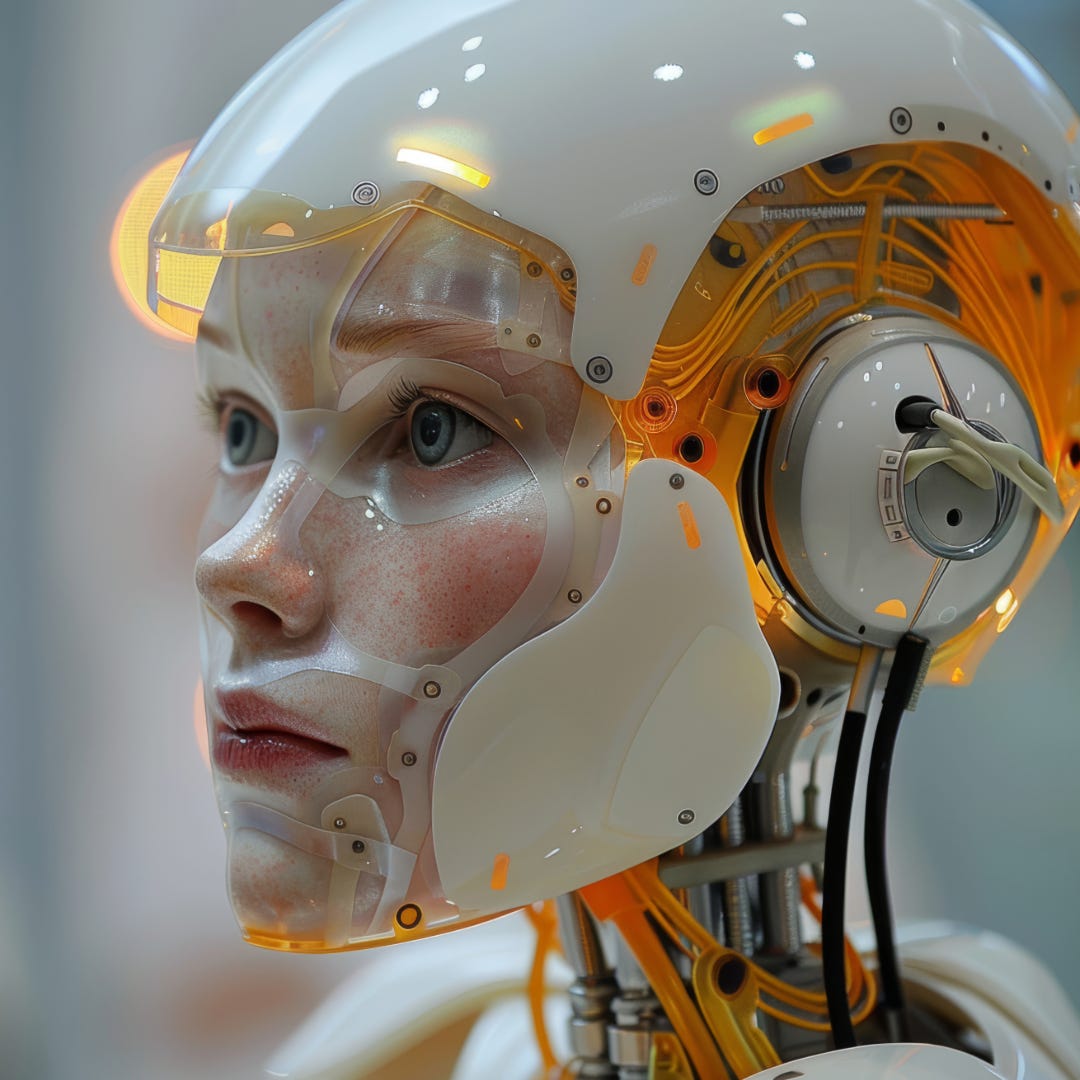
I recently had a fascinating conversation with John Morley and Bill Schmarzo, which inspired me to share a bit of our conversation. First, Bill, a data scientist who teaches MBA students, has created his own personal ChatGPT he calls a YODA (Your Own Digital Assistant). By training it on his past research papers, YouTube videos and other content, he is creating a digital version of himself. I can’t help but wonder if this a signal that we’ll all have virtual selves doing all the work while our physical selves live our best lives in the future. He uses YODA as a partner, asking it questions to help him make better sense of the massive body of work he’s generated over the years. But he also wants his thinking to endure into the distant future. It reminded me of roboticist Henrik Schärfe whom I met at TED in 2012. He built an android copy of himself for similar reasons. It looked like him. It talked like him. Its eyes blinked naturally. In passing, some people mistook the android for Henrik. What’s interesting is that in 2012, Henrik could only prophesize about what his robot could do when converging technologies matured in 5-10 years. Imagine what will be possible in 10 more years.
As we build physical and digital versions of ourselves, we’ll need fair and ethical AI models that make space for everyone. Otherwise, only ideas and values from a small subsection of the human population will endure as digital humans become mainstream.
Bill has written an eBook that helps business leaders think like a data scientist. It’s worth a read.
Watch Henrik Schärfe’s TED Talk